
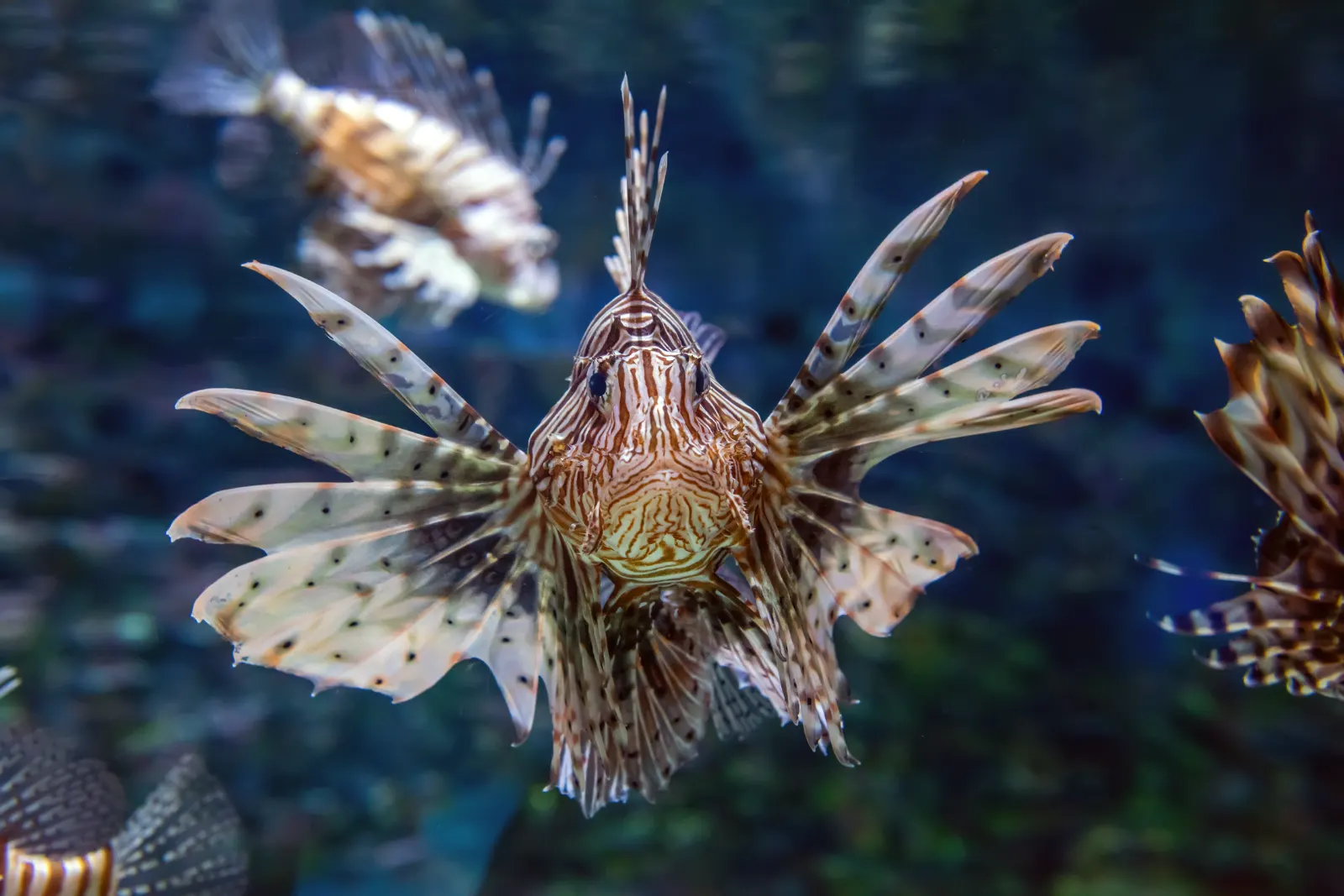
Lionfish become invasive when they establish populations outside their native range and harm the communities they enter. In the western Atlantic, their appetite for small reef animals, frequent reproduction, and limited natural population control allow them to spread and disrupt food webs. Venom alone does not make them invasive. This article explains where the invasion began, how it affects reefs, and why repeated removal can protect particular sites without eliminating lionfish across an ocean.
Which Lionfish Are Invasive, and Where?
The two lionfish invasive species involved in the western Atlantic invasion are red lionfish (Pterois volitans) and common lionfish (Pterois miles). Both belong to the native Indo-Pacific fauna, where their presence is part of the existing ecosystem. Introduced populations now occupy parts of the Atlantic Ocean, Caribbean Sea, and Gulf of Mexico.
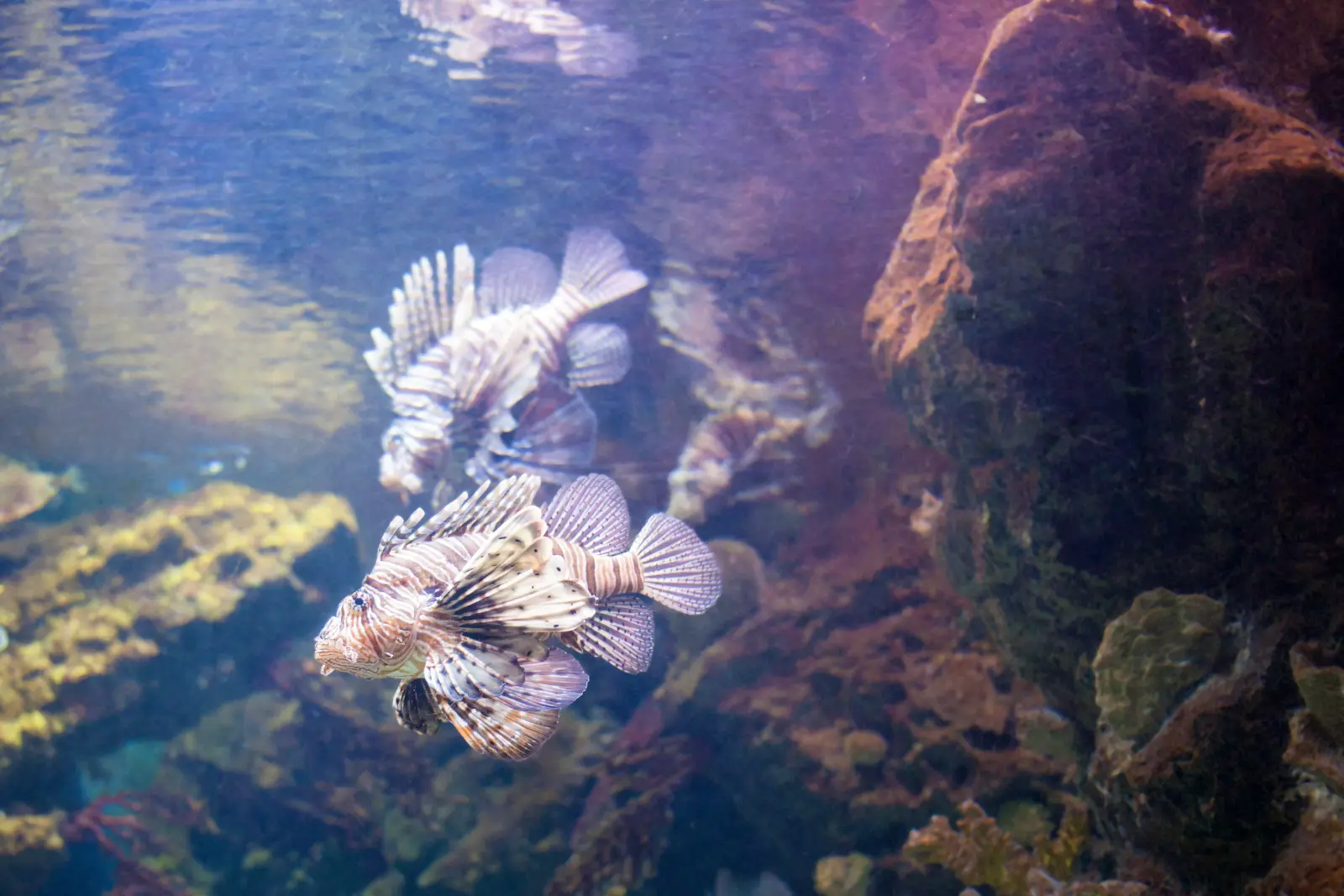
Geography matters when describing those populations. A lionfish on a reef within its native range is not invasive simply because it eats other fish. Outside that range, establishment and ecological harm make the difference. The western Atlantic invasion and the Mediterranean invasion illustrate how the same group of predators can reach new ecosystems through different routes.
How Lionfish Reached the Atlantic and Mediterranean
The first documented wild Atlantic lionfish sighting occurred off southeastern Florida in 1985. Aquarium releases are considered the likely source of the Atlantic introduction, although that sighting does not establish precisely when or how the first fish arrived. Subsequent spread through the Bahamas and Caribbean turned a local introduction into a regional invasion.
Lionfish invasive spread in the Mediterranean followed a different route. Pterois miles entered from the Red Sea through the Suez Canal, with established populations around Cyprus and elsewhere in the eastern Mediterranean. That canal connection allowed fish to expand into connected waters without an aquarium release. These separate histories matter because preventing releases addresses one pathway, while it cannot close an existing marine corridor.
Why Lionfish Spread and Return After Removal
Once introduced, lionfish can replenish their populations quickly. Females can spawn every few days under favorable conditions, releasing floating egg masses. After hatching, larvae travel with currents, connecting reefs that may be far apart. Reproduction and dispersal therefore work together: one supplies new individuals, while the other carries them beyond the reef where spawning occurred.
Does removing fish from one reef prevent them from returning? No. Larvae can arrive from other populations, and older fish can move into cleared habitat. Deep reefs and other difficult-to-reach areas also provide populations that divers cannot routinely remove. A successful removal reduces local pressure; it does not isolate the reef from the wider invasion.
How Predation Changes Reef Communities
That continuing supply matters because lionfish consume small fish and crustaceans, including young members of native reef communities. In a 2008 experiment in the Bahamas, researchers Mark Albins and Mark Hixon found that a single lionfish reduced native fish recruitment on small experimental patch reefs by 79% over five weeks. Recruitment means the addition of young fish to a local population. The result demonstrates a mechanism of harm, not a universal loss expected on every reef.
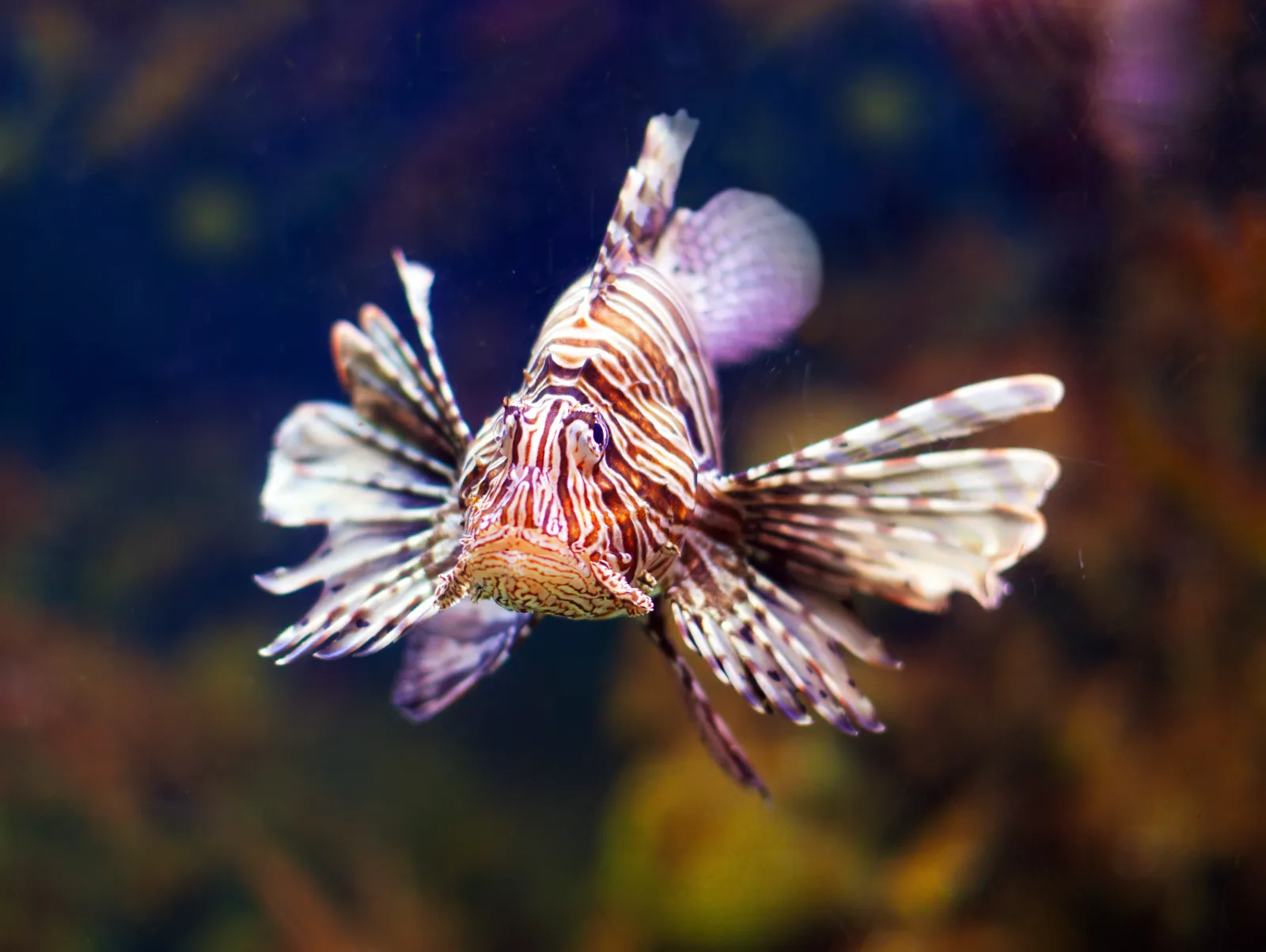
When fewer young fish survive, fewer can join the breeding population or fill their ecological roles. Losses of herbivorous fish can weaken grazing that helps limit algae, although outcomes depend on which prey disappear and other reef conditions. Lionfish do not need to eat coral to affect coral reef fish communities.
Why Natural Predators Have Not Stopped the Invasion
The presence of lionfish predators does not establish that predation controls their numbers. Groupers and sharks have sometimes consumed lionfish, but occasional feeding differs from sustained mortality sufficient to offset reproduction and incoming larvae. Venomous spines help deter attacks, while prey and predators in invaded waters may respond poorly to an unfamiliar fish.
Population control requires evidence of reduced abundance or population growth, not simply a photograph of a predator eating one individual. Feeding speared lionfish to sharks or other large fish is therefore not a sound substitute for removal. It can condition animals to associate divers with food and create additional risks without demonstrating reef-scale control.
What Local Removal Can Achieve
Because natural control remains insufficient, trained divers use spears and collection equipment to remove lionfish from accessible reefs. Repeated visits can suppress local abundance and reduce predation pressure. The useful management question is whether removals are protecting native communities at a particular site, not whether one event collected an impressive total.
Brazil’s invasion shows why monitoring must extend beyond long-affected areas. Since August 2026, a municipal government in Brazil has paid about $1.90 for each lionfish caught and delivered to Colônia Z-22. That local incentive supports collection; it does not establish that the surrounding population is controlled. Incentives and collection arrangements can change, while safe handling remains essential because the spines can cause painful envenomation.
Key Takeaways
- Native range, not appearance or venom, determines whether a population is invasive.
- Predation can sharply reduce the recruitment of native reef fish.
- Occasional natural predators do not necessarily provide effective population control.
- Targeted removals can protect individual reefs without eradicating the wider invasion.
- Brazil’s recent reports show why monitoring and local responses remain necessary.
Frequently Asked Questions
Are lionfish invasive?
Yes, in waters where they have been introduced, established, and caused ecological harm. The label applies to those populations, not automatically to every lionfish everywhere.
Does Florida pay a bounty for lionfish?
Florida does not have a universal, fixed statewide payment for every lionfish caught. Florida Fish and Wildlife Conservation Commission removal programs and organized events may offer prizes or other incentives under specific rules.
Should lionfish be killed?
Targeted killing is an accepted management tool in invaded waters, provided removal follows local rules and uses safe, humane methods. It is not a reason to kill lionfish in their native habitats, and untrained swimmers should not attempt to grab or handle them.
Where are lionfish native?
Red lionfish are native to tropical parts of the Indian and Pacific oceans. Common lionfish are native primarily to the Indian Ocean, including the Red Sea; neither species is native to Florida.
Where did lionfish come from?
For the Atlantic invasion, the important distinction is between the fishes’ evolutionary origin and their immediate introduction pathway. They originated in Indo-Pacific ecosystems, but captive aquarium fish are considered the likely founding source, rather than fish swimming directly across an ocean.
Can occasional predation keep an established population under control?
An observed feeding event cannot show that a population is declining. Effective control would require predators to remove enough lionfish consistently across the habitats they occupy, something managers cannot currently rely on in invaded regions.
Protecting Reefs Through Sustained Removal
Protecting a reef means maintaining lower predation pressure over time. The recruitment experiment in the Bahamas explains why that effort matters: losing young fish can impair the community’s ability to replace itself. The dispersal process explains why the work cannot end after a single successful collection.
For reef managers, the practical approach is to pair repeated removal at priority sites with monitoring of lionfish and native fish responses. For residents and visitors, the useful first step is to follow local reporting and handling guidance or participate through a trained removal program. Brazil’s collection incentive illustrates one local response, but payment alone is not the measure of success. The goal is a sustained ecological benefit at reefs that management can realistically protect.